
10 Mistakes First-Time Surfers Make
(And How to Avoid Them)
There’s nothing quite like the feeling of catching your first wave. The ocean, the adrenaline and the sense of accomplishment make surfing one of the most rewarding sports in the world. But while surfing may look effortless from the beach, every beginner quickly discovers that it comes with a learning curve.
The good news is that many first-time surfers make the same mistakes and most of them are easy to avoid once you know what to look out for. Whether you’re preparing for your first surf lesson or planning a surf trip, understanding these common pitfalls can help you stay safe, build confidence and improve much faster.
Here are the 10 most common mistakes first-time surfers make and how you can avoid them.
15. June 2026, by Nejla Halilovic
1. Choosing a Board That’s Too Small
One of the biggest mistakes beginners make is selecting a short, high-performance surfboard because it looks more advanced or exciting.
The reality is that smaller boards are less stable and much harder to paddle and balance on. As a result, beginners often spend more time falling off than actually surfing.
How to avoid it: Start with a large foam board, typically between 8 and 9 feet long. The extra volume provides better stability and makes it much easier to catch waves and practice your technique.
2. Not Checking Surf Conditions
Many new surfers head straight into the water without paying attention to wave size, tides, wind conditions or currents.
This can lead to frustrating sessions—or worse, dangerous situations.
How to avoid it: Before every session, take a few minutes to check the surf forecast. Understanding the conditions will help you choose a safe spot and know what to expect once you’re in the water. Check out the best surf spots and their surf conditions!
3. Ignoring Surf Etiquette
Surfing has its own set of unwritten rules designed to keep everyone safe and ensure that waves are shared fairly.
Beginners who are unaware of these rules can accidentally create dangerous situations or upset other surfers.
How to avoid it: Learn the basics of surf etiquette before paddling out. Respect right-of-way, avoid dropping in on someone else’s wave, and always be aware of your surroundings.
4. Paddling Through the Impact Zone
The impact zone is where waves are breaking. Many beginners paddle straight through it because it seems like the shortest route to deeper water.
Unfortunately, this usually leads to getting hit by wave after wave and becoming exhausted before the session even begins.
How to avoid it: Watch experienced surfers and identify channels—areas where waves break less frequently. Using these pathways will save energy and make getting out much easier.
5. Standing Up Too Early
The excitement of catching a wave often causes beginners to jump to their feet before the wave has fully picked them up.
The result is usually a quick wipeout.
How to avoid it: Focus on timing. Feel the wave pushing the board forward before performing a smooth and controlled pop-up.
6. Looking Down Instead of Ahead
A common beginner instinct is to look down at their feet when standing up.
While understandable, this often causes balance issues and makes it harder to maintain control.
How to avoid it: Keep your eyes focused ahead in the direction you want to go. Your body naturally follows your line of sight, which improves balance and stability.
7. Surfing Waves Beyond Your Ability
Watching experienced surfers ride larger waves can be inspiring, but attempting conditions that are too advanced is one of the quickest ways to lose confidence.
Bigger waves require stronger paddling skills, better positioning and more experience.
How to avoid it: Progress gradually. Spend time mastering smaller waves and building confidence before moving on to larger surf.
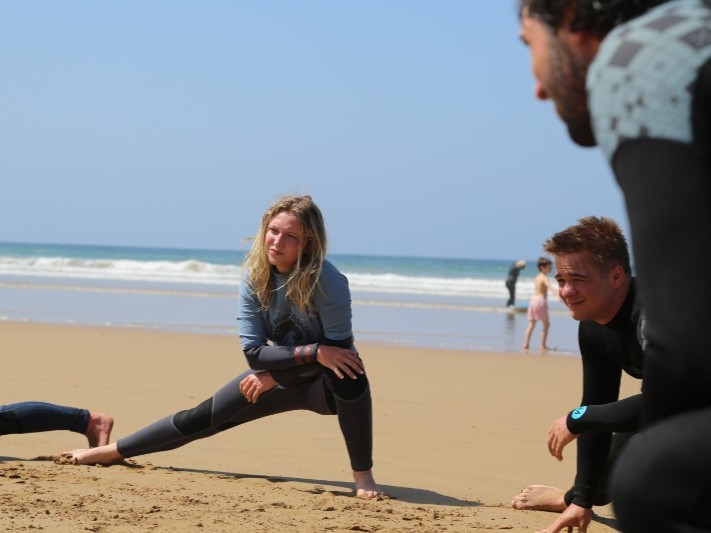
8. Skipping the Warm-Up
Many beginners are eager to get into the water and overlook the importance of warming up.
Cold muscles can lead to poor performance, faster fatigue and a greater risk of injury.
How to avoid it: Spend five to ten minutes warming up with dynamic movements such as arm circles, shoulder rotations, light jogging, and mobility exercises.
9. Losing Control of the Board
A surfboard can become dangerous when it is not properly controlled, especially in crowded areas.
Letting go of your board during a wipeout can put both you and other surfers at risk.
How to avoid it: Always maintain awareness of your board and use a properly fitted leash. Learning board control is a key part of becoming a responsible surfer.
10. Expecting Instant Results
Perhaps the most common mistake of all is expecting to become a skilled surfer after just a few sessions.
Surfing takes patience, consistency and practice.
How to avoid it: Focus on small victories. Successfully paddling into a wave, improving your pop-up or standing for a few seconds longer are all signs of progress worth celebrating.

Every surfer starts as a beginner, and mistakes are simply part of the learning process. The difference between those who improve quickly and those who become discouraged often comes down to preparation, patience and a willingness to learn from each session.
By choosing the right equipment, respecting surf etiquette, understanding ocean conditions and setting realistic expectations, you’ll create a strong foundation for long-term success in the water.
Remember, surfing isn’t about perfection—it’s about enjoying the journey. Stay consistent, stay safe and most importantly, have fun. Before long, those challenging first sessions will become some of your favorite memories and you’ll be catching waves with confidence.